
Buying Property in Mallorca
Buying property in Mallorca involves legal, tax and contractual decisions that go well beyond agreeing a price. As specialist property lawyers in Mallorca, we guide both domestic and international buyers through the entire process — from the initial title search to registration at the Land Registry, including legal due diligence, the preliminary purchase contract, the notarial deed and tax settlement.
The Balearic property market has its own particularities: island planning rules, rural land with specific restrictions, a high proportion of non-resident buyers and a tax framework that can vary significantly depending on how the transaction is structured. Understanding those details before you sign can make a difference of tens of thousands of euros.
You can send us the title search, draft purchase contract or notarial deed and we will help you structure the transaction with legal certainty and tax efficiency.
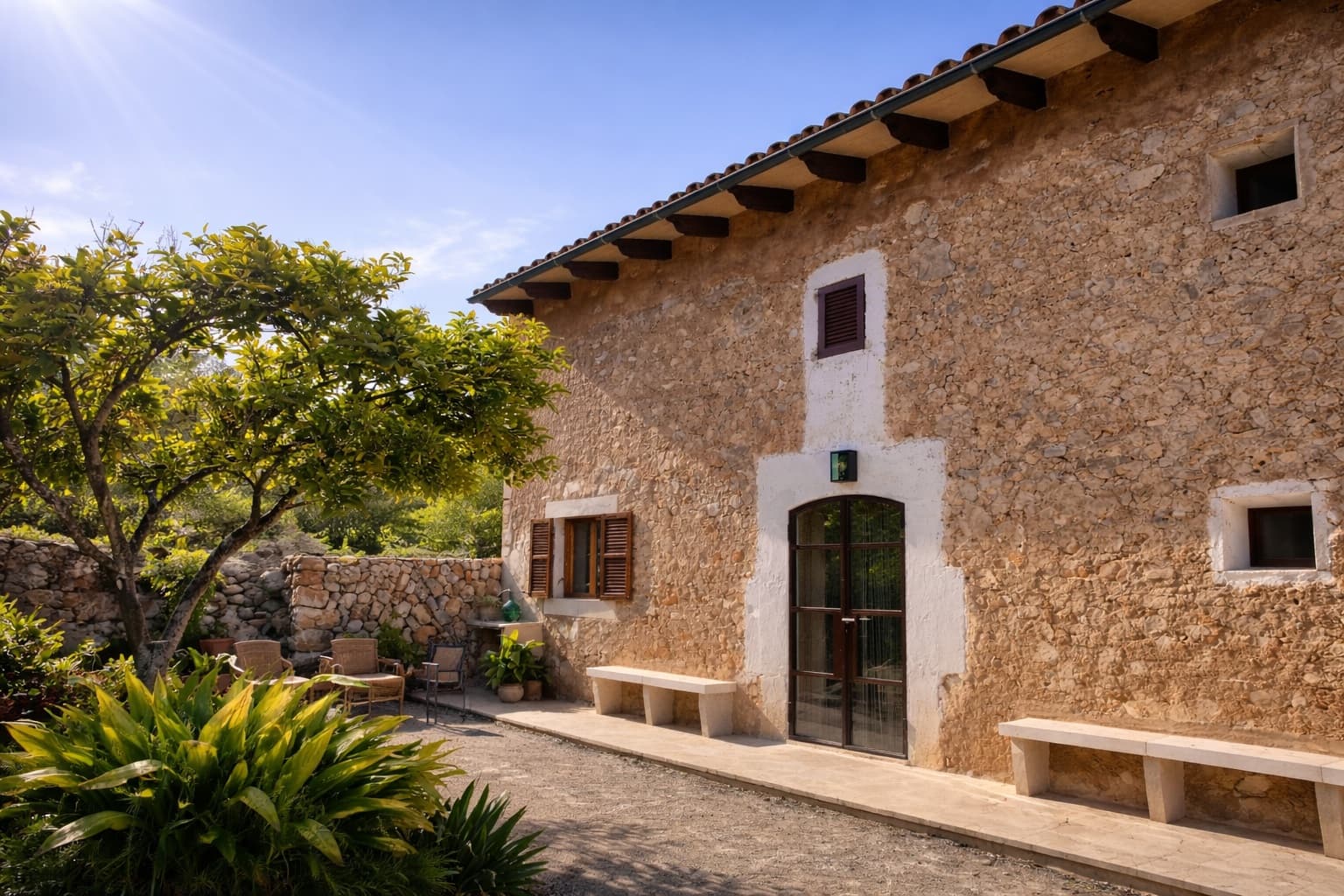
Common risks when buying property in Mallorca
A property purchase can look straightforward and conceal serious problems. In Mallorca, the following risks are particularly common — some of which are only detectable by reviewing specific documentation before you sign:
- Uncancelled charges on title: old mortgages, court orders or liens that the seller has not cleared and which the buyer would inherit on completion.
- Unlicensed works or planning breaches: extensions or alterations built without planning permission that can block a future sale, prevent mortgage financing or trigger enforcement action.
- Rural land restrictions: a significant proportion of Mallorca's property stock is classified as protected rural land. The permitted uses, renovation rights and building possibilities are very limited and vary depending on the specific classification.
- Poorly drafted purchase contracts: ambiguous clauses on mortgage conditions, unrealistic timelines or unbalanced penalty provisions that leave the buyer exposed.
- ITP transfer tax miscalculation: in the Balearic Islands, ITP has progressive rates and the tax authority carries out frequent value checks. An error in the taxable base or rate can result in additional assessments with interest.
- Municipal capital gains tax (plusvalía): normally payable by the seller, but it is worth checking who bears it contractually and whether the calculation is correct following recent legislative changes.
The property purchase process step by step
In Mallorca, a property transaction typically takes between 6 and 12 weeks from price agreement to completion at the notary. Each stage has its own timeline, documents and key decisions. Here is what we review and coordinate at each step:
Step 1
Transaction analysis
We define the property, price, payment method and financing. We review whether the structure fits your objectives — primary residence, holiday home or investment — and identify any tax planning opportunities before you make a commitment.
Step 2
Legal and planning due diligence
We obtain and review the Land Registry title search, ownership, charges, cadastral records, planning status, building licences, community of owners minutes and outstanding IBI payments. For rural or unusual properties we extend the review with specialist technical or planning reports.
Step 3
Preliminary purchase contract
We draft or review the preliminary contract: deposit amount, price, timeline, mortgage condition and penalty provisions. A well-drafted contract protects the buyer and provides realistic time to complete all necessary checks.
Step 4
Notarial deed and completion
We review the draft notarial deed, coordinate payment arrangements, debt clearance certificates, latest community and IBI receipts, and any powers of attorney required. We attend completion and verify that all agreed conditions are met.
Step 5
Taxes, registration and post-completion
We settle ITP or VAT/stamp duty as applicable, handle Land Registry registration and coordinate utility transfers, cadastral updates and community notifications. For non-resident sellers, we also manage the 3% IRNR withholding obligation where it applies.
Costs and taxes when buying property in Mallorca
The total cost of buying property in Mallorca typically adds between 10% and 12% on top of the purchase price, combining taxes, notary, Land Registry and professional fees. Knowing that figure in advance is essential to plan your financing correctly.
- ITP transfer tax (resale property): progressive rates in the Balearic Islands. On a property of €400,000, ITP typically falls between €32,000 and €36,000 depending on the cadastral reference value. Properties above €1,000,000 attract a marginal rate of 13%.
- VAT + stamp duty (new build): 10% VAT on the purchase price plus 1.2% stamp duty (AJD) on the notarial amount. Social housing may qualify for a reduced 4% VAT rate.
- Notary fees: between €600 and €2,500 depending on the declared value and complexity of the deed.
- Land Registry fees: between €400 and €1,500 depending on the purchase price and number of entries.
- Gestoría or lawyer fees: variable depending on the scope of service. At Cantallops Legal we work on agreed fixed fees per transaction — no surprises.
- Municipal capital gains tax (plusvalía): normally payable by the seller unless otherwise agreed. Worth verifying who bears it contractually and whether the calculation is correct.
Buying property in Mallorca as a foreigner or non-resident
Mallorca is one of Europe's most internationally active property markets. British, German, French and Scandinavian buyers account for a very significant share of transactions on the island, particularly in the second home and premium property segments.
If you live outside Spain, the purchase requires a number of additional steps that are best organised well in advance: obtaining a NIE (Spanish tax identification number for foreigners), opening a Spanish bank account, arranging an apostilled power of attorney if you cannot attend completion in person, and reviewing the tax implications in your country of residence.
Frequently asked questions about buying property in Mallorca
How much does it cost to buy a €400,000 property in Mallorca?
On top of the purchase price you should budget between 10% and 12% in additional costs. For a €400,000 resale property, ITP transfer tax in the Balearic Islands typically amounts to €32,000–€36,000, notary fees to €800–€1,500, Land Registry fees to €400–€900, and lawyer or gestoría fees depending on the agreed scope. In total, allow for between €40,000 and €50,000 on top of the purchase price to complete without liquidity pressure.
Can I buy property in Mallorca without living in Spain?
Yes, non-residents can purchase property in Spain freely. You will need a NIE (Spanish tax identification number), a Spanish bank account for the transaction and, if you cannot attend the notary in person, an apostilled power of attorney from your country. You should also be aware that if the seller is a non-resident, the buyer is legally required to withhold 3% of the purchase price and pay it to the Spanish tax authority as an advance payment of the seller's capital gains tax.
What is a NIE and how do I get one from abroad?
The NIE is the tax identification number required by all non-Spanish nationals to sign deeds, pay taxes and open bank accounts in Spain. It can be applied for at the Spanish consulate in your country of residence — processing times vary from 2 to 8 weeks depending on the consulate. It can also be obtained in Spain directly at a police station with a prior appointment, or through a representative acting under a notarised power of attorney.
What is legal due diligence and why does it matter?
Legal due diligence is the full review of the property before you sign any commitment. It covers the Land Registry title search, ownership and charges, cadastral records, planning status, building licences, community of owners debts and outstanding IBI bills, and any pending administrative proceedings. In Mallorca it is particularly important because a significant number of properties have unlicensed works, rural land with restrictions, or historical charges on title that have never been formally cancelled.
What is the difference between a deposit contract and a purchase contract?
In Spain, preliminary contracts most commonly take the form of arras penitenciales (Article 1454 of the Civil Code): either party may withdraw — the buyer loses the deposit, the seller returns it doubled. These are the standard form for residential property. Arras confirmatorias, by contrast, operate as a part-payment of the price and do not permit unilateral withdrawal — breach only gives rise to a claim for damages or enforced completion. The type of contract has significant practical consequences and should always be clearly agreed in writing.
What taxes does a non-resident pay when selling property in Mallorca?
A non-resident seller pays Spanish capital gains tax (IRNR) at 19% on the profit made. The buyer is also legally required to withhold 3% of the total sale price and pay it directly to the Spanish tax authority as an advance against the seller's liability. If the withholding exceeds the final tax due, the seller can claim a refund. Municipal capital gains tax (plusvalía) may also apply unless there is no increase in the land value.
What happens if the seller cannot clear the mortgage before completion?
This is a common situation. The standard solution is to coordinate the economic cancellation of the mortgage at completion: part of the purchase price is paid directly to the seller's bank to redeem the loan and the charge is released simultaneously with the transfer. The formal cancellation at the Land Registry can be processed afterwards. This coordination needs to be anticipated in the preliminary contract and agreed in advance with the notary and bank.
What is rural land (suelo rústico) in Mallorca and what restrictions apply?
Rural land accounts for a very significant proportion of Mallorca's territory. There are different categories — ordinary rural, protected rural and special protection — each with very different permitted uses. In general, building new residential properties is highly restricted, and renovation or extension works are subject to the specific category and the Consell de Mallorca's planning rules. Before buying rural land or a property with existing buildings on rural land, it is essential to verify the actual land classification and the planning status of any existing structures.
How long does a property purchase in Mallorca take from contract to completion?
The typical period between signing the preliminary contract and completing at the notary is 4 to 10 weeks. The most common determining factor is mortgage financing, which requires a valuation, bank credit analysis and the issue of a binding offer (which by law must be provided at least 10 business days before completion). Complex due diligence, obtaining a NIE or coordinating a power of attorney from abroad can also extend the timeline. Agreeing realistic timeframes from the outset is key to a smooth transaction.
Is it compulsory to use a lawyer when buying property in Mallorca?
It is not legally required, but it is strongly advisable. The notary authenticates the deed but does not advise either party. A gestoría handles administrative filings but does not carry out legal or planning reviews. A specialist property lawyer reviews the entire transaction, identifies risks before you sign and negotiates terms in your favour. On a transaction of €300,000 or more, the cost of legal advice is proportionate to the risk it mitigates.
You may also find these useful
Cantallops Legal · Property purchases in the Balearic Islands
Would you like us to review your property purchase in Mallorca?
Send us the title search, draft contract or notarial deed. We will review the documentation, identify the risks and explain how to structure the transaction with full legal certainty and efficient tax planning.